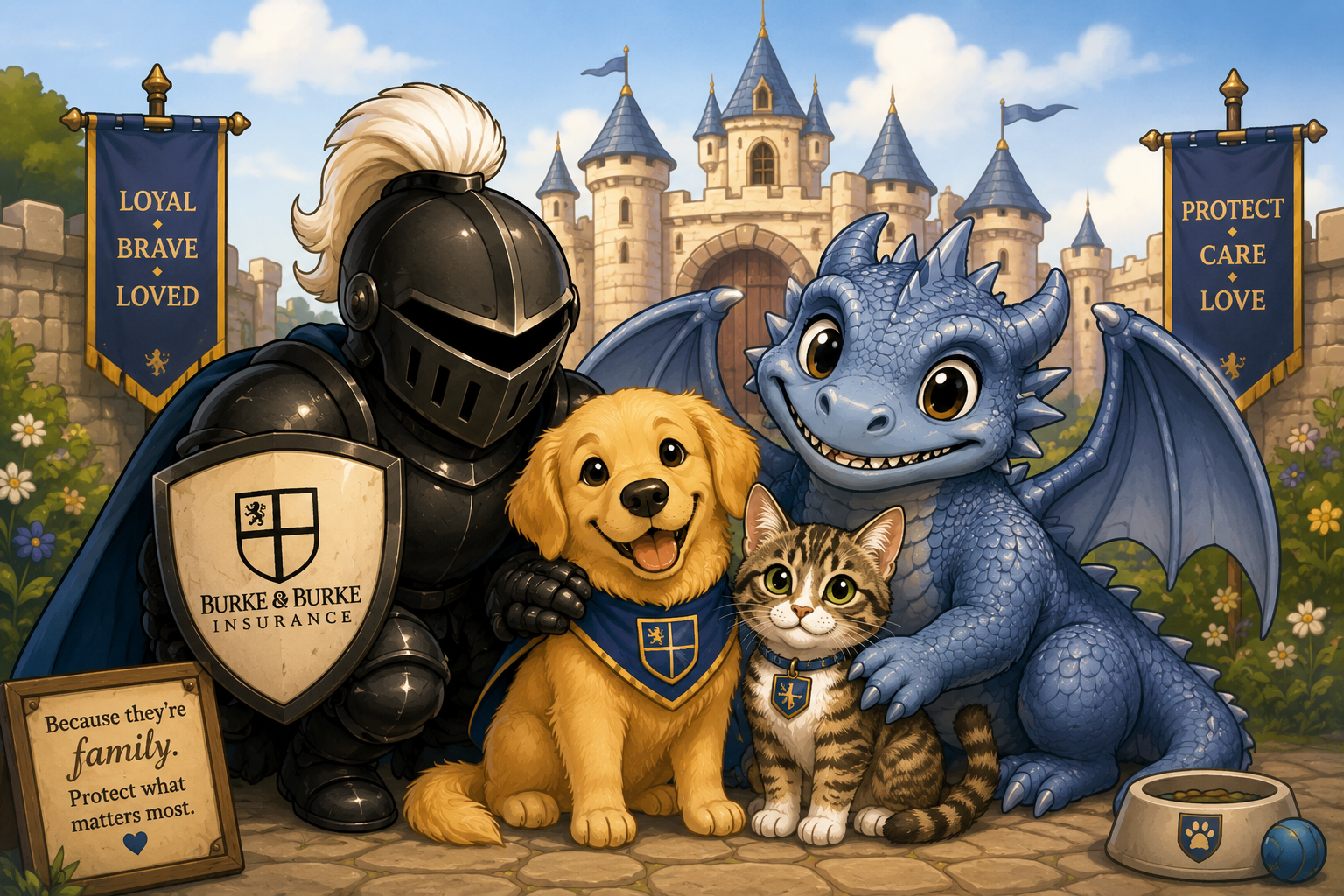

In every kingdom, there are loyal companions who guard the gates, warm the hearth, and stand by their families through every season. Our pets may not wear armor, but they are brave, devoted, and deeply loved. When illness or injury strikes, pet insurance helps ensure that cost doesn’t stand between your companion and the care they need.
Pet insurance is designed to help manage veterinary expenses when the unexpected happens. Like other forms of insurance, it provides financial support against life’s “dragons” — accidents, illnesses, and medical emergencies — so pet owners can focus on care, not cost.
How Pet Insurance Works
Pet insurance works differently than human health insurance. Most policies reimburse you for covered veterinary expenses after you pay the vet directly and submit a claim. Reimbursement is based on the coverage options you choose, such as deductible, reimbursement percentage, and annual limit.
This approach gives pet owners the freedom to visit any licensed veterinarian, emergency clinic, or specialist without worrying about provider networks.
What Pet Insurance Typically Covers
Pet insurance coverage varies by policy, but most plans fall into three main categories: Accident Coverage
Accident coverage helps protect against sudden, unexpected injuries — the ambushes no one sees coming. This may include things like broken bones, cuts, swallowed objects, or emergency surgeries after an accident.
Illness Coverage
Illness coverage helps when a pet becomes sick, whether suddenly or over time. This can include infections, chronic conditions, cancer, arthritis, or hereditary conditions, depending on the policy. Accident-and-illness plans are the most common and comprehensive option.